Whats Is Bell's Palsy
Bell's Palsy is a paralysis of the facial muscles on one side of the face. Although not strictly an eye condition, as the paralysis affects the facial muscles, including the eyelids, special precautions and care needs to be taken to keep the eyes moist and healthy.
A message from our optometrist: "One of the biggest risks with Bell's palsy isn't the facial weakness itself - it's the inability to blink or fully close the eye. Even a healthy cornea can become damaged surprisingly quickly if it's left exposed. Frequent lubricating eye drops during the day and protecting the eye at night are simple but extremely important steps that help prevent long-term problems while the facial nerve recovers."
What Are The Signs And Symptoms Of Bell's Palsy?
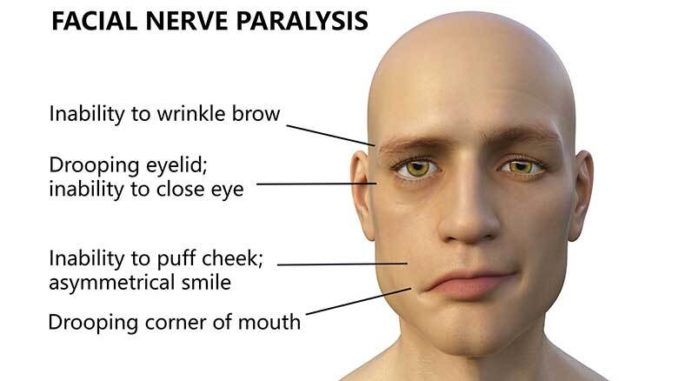
As Bell's Palsy causes the muscles on one side of the face to be weakened or even paralysed, the first and most obvious sign is that the face will appear to droop. More detailed signs of Bell's Palsy include
- Lopsided Smile
- Inability to wrinkle the brow
- Drooping eyelid
- Inability to close one eye
- Asymmetrical smile
- Inability to puff out one cheek
- Drooping of one side of the mouth
These signs of Bell's Palsy cause various symptoms, which include
- Headache
- Numbness on the side of the face
- Drooling
- Loss of sense of taste
- Dry eyes
- Biting the cheek or tongue
There are several more serious conditions that exhibit similar symptoms to Bell's palsy, such as strokes and brain tumours. While Bell's palsy isn't dangerous or life-threatening, you should seek out professional medical attention should any of the symptoms arise. It's vital that these more dangerous conditions are ruled out.
What Causes Bell's Palsy?
Bell's palsy occurs when the seventh cranial nerve (the facial nerve) becomes inflamed, leading to temporary weakness or paralysis of the muscles on one side of the face. The exact cause is not fully understood, but it is thought that many cases are triggered by viral infections that cause inflammation of the nerve. In fact, the name Bell's Palsy comes from the Scottish surgeon Sir Charles Bell, who discovered that severing the seventh cranial nerve (facial nerve) causes facial paralysis.
It affects men and women equally, and it is thought to affect between 20 and 30 people per 100,000 per year in the UK. However, if you are between the ages of 15 and 60 or a pregnant woman, you are at a higher risk. There are several predisposing factors that seem to increase the risk of developing Bell's Palsy, including
- Diabetes
- Stress
- Pregnancy, particularly in the third trimester
- Autoimmune disorders such as multiple sclerosis
- Injury
- Lyme disease
- Herpes simplex and Herpes zoster virus
How Long Does Bell's Palsy Last?
Although there is a fast onset, it can take 48 hours or more for the full extent of the paralysis to form. Fortunately, in most cases, Bell's Palsy is temporary; significant improvements can be seen within a couple of weeks, but it may take several weeks and even months for a full recovery.
Only in rare cases does Bell's Palsy not heal.
How Does Bell's Palsy Affect The Eyes?
Whilst Bell's Palsy should not affect your vision, it can cause short-,and possibly long-term complications.
Due to the facial paralysis, the muscles that are used to open and close the eye are also affected. Closing the eye on the paralysed side of your face will be impossible for a time, even when you sleep. This can cause the cornea to dry out, possibly leading to dry eye syndrome, exposure keratitis, or even a corneal ulcer.
Eye care is extremely important to prevent damage to your eye during the early stages of Bell's Palsy, and you will need to
- Use eye drops frequently
- Wear sunglasses whilst outside
- Tape or patch the eyelid closed at night if advised by your doctor or eye specialist, to help protect the cornea while sleeping
- Use of prescription eye medication if prescribed
If treated carefully, Bell's Palsy should have no long-term effects on your eye and vision, however, in rare cases, it can leave you with an outward turned or dropping eyelid, which may be corrected by surgery.
Treatment For Bell's Palsy
There is no specific cure for Bell's palsy, but early treatment can improve recovery and reduce the risk of long-term problems. Treatment is most effective when corticosteroids are started within 72 hours of symptoms beginning. It may be possible to prevent further damage by starting a course of steroids, which will help reduce the inflammation around the nerve. In some cases, antiviral medication may be prescribed alongside corticosteroids, particularly if a viral cause such as herpes zoster is suspected, although steroids remain the mainstay of treatment.
If a causative factor can be defined, such as Herpes Zoster, then your doctor will prescribe medication to treat that. If it is thought stress may be a factor, then stress-relieving behaviours such as relaxation therapy, a good diet, and an increase in physical exercise may all help.
Reassuringly, 7 to 8 people out of 10 make a full recovery, particularly when treatment is started promptly.
Don't forget, if you have any worries or concerns, speak to your optometrist, or you can check out our Eye Help pages, which are available to everyone. However, if you order lenses from us, you will have access to our contact lens aftercare pages and our optometrist from within Your Account.