Dry Eyes? Which are the best Contact Lenses?
Expert advice on choosing comfortable contact lenses if you suffer from dry eyes.
Reviewed by John Dreyer BSc (Hons), DipCL – Optometrist & Clinical Content Reviewer
If your contact lenses often feel dry, gritty or uncomfortable, you're certainly not alone. Dry eye symptoms are one of the most common reasons people worry they may have to stop wearing contact lenses.
The good news is that dry eyes don't automatically mean giving up contact lenses . Modern contact lens materials, improved surface technologies, and a better understanding of dry eye disease mean that many people continue to wear contact lenses comfortably every day.
Clear vision should never come at the expense of comfort. Choosing the right contact lens and understanding why your eyes feel dry in the first place can make a significant difference.
This guide explains why contact lenses sometimes feel dry, what features to look for when choosing lenses, and which contact lenses our optometrist recommends for different types of dry eye sufferers.

Our Optometrist's Advice
Dry eye symptoms don't necessarily mean contact lenses are unsuitable for you.
In many cases, improving comfort is about understanding why your eyes feel dry rather than simply changing to another brand of contact lens.
Lens material, replacement schedule, tear quality, screen use and even your working environment can all influence how comfortable your lenses feel.
Sometimes finding the most suitable contact lens involves trying more than one option before discovering the lens that works best for your eyes and your lifestyle.
Our Recommended Contact Lenses for Dry Eyes
Many recent advancements in contact lens materials and surface technologies mean that people with dry eyes can often continue wearing contact lenses comfortably every day.
Choosing the right contact lens can make a significant difference to comfort, helping your eyes feel fresher throughout the day without compromising clear vision.
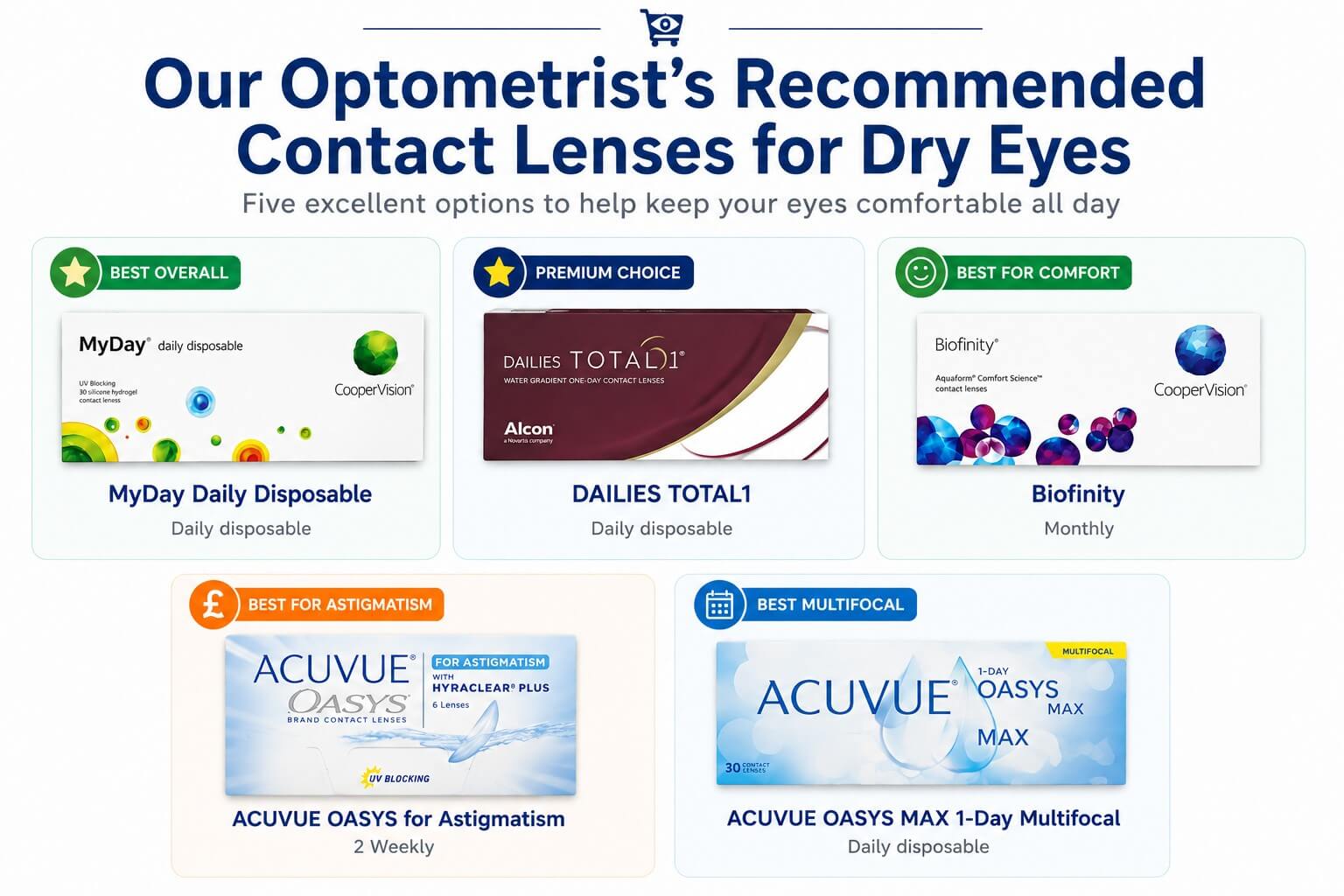
The contact lenses below are our optometrist's choice for different types of dry eye sufferers and wearing needs.
| Best For | Contact Lens | Replacement | Material / Type | Why We Recommend It |
|---|---|---|---|---|
| • Best Overall | MyDay Daily Disposable | Daily | Silicone hydrogel | A breathable daily lens offering a strong balance of comfort, oxygen transmission and convenience for many everyday wearers. |
| • Premium Choice | DAILIES TOTAL1 | Daily | Silicone hydrogel | Water Gradient Technology provides high surface moisture and makes this a popular option for wearers concerned about end-of-day comfort. |
| • Best Monthly | Biofinity | Monthly | Silicone hydrogel | Aquaform® Technology helps retain moisture while allowing good oxygen transmission for regular wearers. |
| • Best for Astigmatism | ACUVUE OASYS for Astigmatism | Reusable | Toric silicone hydrogel | Combines a stable toric design with moisture-focused lens technology for wearers who need astigmatism correction. |
| • Best Multifocal | ACUVUE OASYS MAX 1-Day Multifocal | Daily | Multifocal silicone hydrogel | A premium multifocal option designed for people who need near and distance correction while also prioritising comfort. |
A note about our optometrists' recommendations
The most advanced contact lens isn't automatically the best contact lens for every person with dry eyes.
Your prescription, tear quality, wearing habits, eye health, and the way a contact lens fits your eyes all influence how comfortable it will feel throughout the day.
A professional contact lens fitting remains the best way to identify the most suitable contact lens for your individual needs.
Looking for more comfortable contact lenses?
Explore our range of contact lenses suitable for dry eyes, including many of the options recommended in this guide.
N.B. Your optometrist may recommend a different contact lens depending on your prescription, tear film, eye health and lifestyle. These recommendations are intended as a guide. We always advise that you wear the contact lenses and prescription approved during your professional fitting.
Why Do My Contact Lenses Feel Dry?
Contact lenses don't necessarily cause dry eyes, but they can sometimes make an existing problem more noticeable.
Every time you blink, a thin layer of tears spreads across the surface of your eye and your contact lens. This tear film helps keep your eyes comfortable, your vision clear and the surface of the eye healthy.
If the tear film becomes unstable or evaporates too quickly, your contact lenses may begin to feel dry, particularly towards the end of the day.
You may notice discomfort sooner if you spend long hours looking at a computer, work in air-conditioned environments, or naturally produce fewer tears.
Fortunately, understanding why your lenses feel dry is often the first step towards improving comfort.
What Causes Dry Eyes?
Dry eye disease develops when your eyes either don't produce enough tears or the tears they produce evaporate too quickly.
Many people assume their contact lenses are causing the problem. In reality, contact lenses often reveal or make an underlying dry eye problem more noticeable rather than being the sole cause.
Dry eyes become more common as we get older, but they can affect adults of any age. Everyday factors such as prolonged screen use, central heating, air conditioning or spending time in dry environments can all contribute.
Some medications and medical conditions may also affect tear production, making contact lenses feel less comfortable than they otherwise would.
Common contributing factors include:
- Ageing
- Hormonal changes
- Digital screen use
- Air conditioning and heating
- Certain medications
- Blepharitis and eyelid conditions
- Environmental factors
- Underlying dry eye disease
Understanding the underlying cause allows your optometrist to recommend the most appropriate solution, whether that's changing your contact lenses, treating the dry eye itself or making simple changes to your daily routine.
Symptoms of Contact Lens Dry Eyes
Dry eye symptoms don't always appear immediately after inserting your contact lenses. Many people notice that their lenses feel comfortable in the morning but become progressively less comfortable as the day goes on.
Common symptoms include:
- Dryness
- Burning or stinging
- A gritty sensation
- Blurred vision that improves after blinking
- Tired eyes
- Redness
- Contact lenses becoming uncomfortable earlier than expected
- Feeling the need to remove your lenses before the end of the day
Occasional dryness can often be improved with the right advice, appropriate contact lenses, or eye drops approved for contact lens wearers.
However, if you experience persistent discomfort, pain, excessive redness or sudden changes in vision, remove your contact lenses and speak with your optometrist before continuing to wear your contact lenses.
Can You Wear Contact Lenses If You Have Dry Eyes?
Usually, yes.
Having dry eyes does not automatically mean you have to stop wearing contact lenses. In many cases, the problem can be improved by identifying the cause of the dryness and choosing a contact lens that better suits your eyes and lifestyle.
For some people, changing to a daily disposable lens provides a noticeable improvement. Others benefit from a different lens material, a revised wearing schedule or treatment for an underlying dry eye condition.
Sometimes simple changes to your working environment or screen habits can make just as much difference as changing your lenses.
The important thing is not to assume discomfort is something you simply have to live with. If your contact lenses regularly become uncomfortable, your optometrist can usually suggest practical ways to improve comfort while helping you continue wearing contact lenses safely.
What to Look for When Choosing Contact Lenses for Dry Eyes
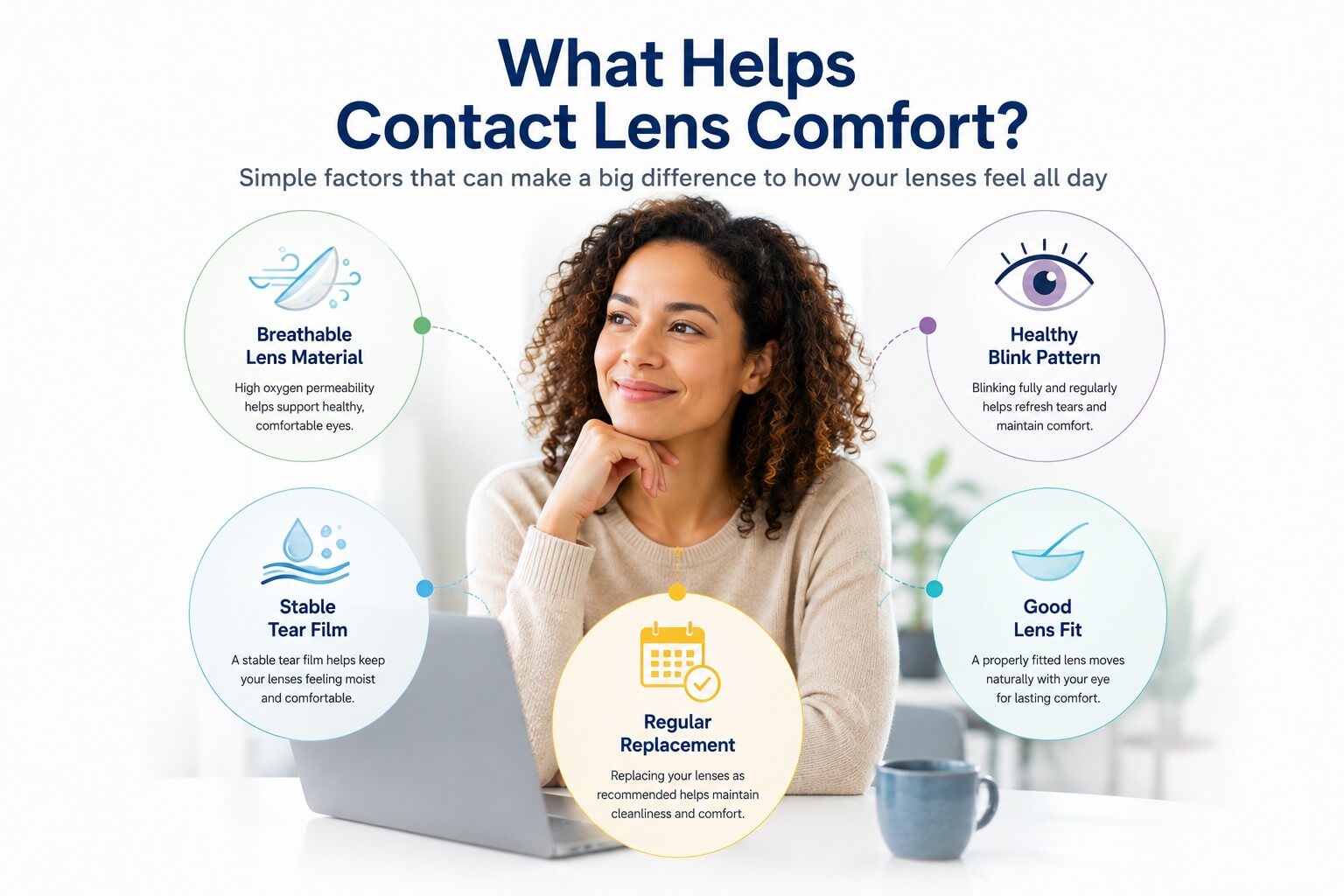
When searching for the "best" contact lenses for dry eyes, it's easy to focus on brand names or the latest technology. In reality, comfort depends on several factors working together.
Modern silicone hydrogel materials allow more oxygen to reach the surface of the eye, while newer surface technologies are designed to help maintain a stable tear film throughout the day.
The way a lens fits your eye and how often it is replaced are equally important.
Rather than looking for one perfect contact lens, it's better to look for the combination of features that best suits your eyes.
| Feature | Why It Matters |
|---|---|
| Lens material | Breathable materials can help support eye health and comfort. |
| Oxygen transmission | Allows oxygen to reach the cornea during lens wear. |
| Surface technology | May help maintain a stable tear film and improve comfort. |
| Replacement schedule | Daily and reusable lenses each offer different advantages depending on your needs. |
| Lens fit | Even an excellent lens may be uncomfortable if it doesn't fit your eye properly. |
No single feature guarantees comfort. It's the combination of these factors, together with your tear film and prescription, that determines how well a contact lens performs.
Daily or Monthly Contact Lenses for Dry Eyes?
Both daily disposable and monthly contact lenses can be excellent choices for people with dry eyes.
Daily disposable lenses are often recommended because you start each day with a fresh, clean lens. This reduces the build-up of deposits that can sometimes contribute to discomfort, particularly towards the end of the day.
Monthly lenses, however, should not be overlooked. Many modern monthly silicone hydrogel lenses provide excellent comfort and are preferred by people who wear contact lenses every day.
The right choice depends on your prescription, wearing routine, eye health and the particular lens that gives you the best comfort.
| Daily Disposable | Monthly | |
|---|---|---|
| Fresh lens | New lens every day | Same pair reused for up to one month |
| Lens deposits | Minimal opportunity for deposits to build up | Deposits may accumulate if cleaning is inadequate |
| Lens care | No cleaning or storage required | Must be cleaned, disinfected and stored correctly |
| Dry-eye comfort | Often a good option for people troubled by deposits or end-of-day discomfort | Can be very comfortable when the material and fit suit the wearer |
| Convenience | Very simple, particularly for occasional wear | Requires a regular care routine |
| Best suited to | People who value freshness and simplicity | Regular wearers whose prescribed monthly lens performs well for them |
Neither wearing schedule is automatically better for dry eyes. Many people find the fresh surface of a daily disposable lens particularly comfortable, but an appropriately fitted monthly silicone hydrogel lens may perform extremely well too. Your prescription, tear film, lens fit and wearing routine matter more than the replacement schedule alone.
Helping Your Contact Lenses Feel More Comfortable
Choosing the right contact lens is only part of the solution. Small changes to your daily routine can often make a noticeable difference to comfort, particularly if your symptoms develop gradually during the day.
Many people blink less when concentrating on digital screens, while dry office environments, central heating and air conditioning can increase tear evaporation.
Becoming aware of these everyday influences can help you identify why your contact lenses feel less comfortable in certain situations.
Simple habits that often help include:
- Following your recommended replacement schedule
- Taking regular breaks from digital screens
- Blinking fully and more frequently when using computers
- Staying well hydrated
- Using lubricating eye drops recommended for your contact lenses
- Attending regular contact lens aftercare appointments
Improving contact lens comfort is often about making several small improvements rather than relying on one dramatic change.

Common Questions About Contact Lenses for Dry Eyes
Are daily contact lenses better for dry eyes?
Not always.
Daily disposable lenses are often recommended because you wear a fresh lens each day, reducing the build-up of deposits. However, many monthly silicone hydrogel lenses also provide excellent comfort when properly fitted and cared for.
Can dry eyes develop even if I've worn contact lenses comfortably for years?
Yes.
Dry eye symptoms can develop gradually. Changes in tear quality, age, hormonal changes, medication, or lifestyle can all affect how your contact lenses feel over time.
Should I stop wearing my contact lenses if my eyes feel dry?
Not necessarily.
Occasional dryness can often be improved by changing your contact lenses, adjusting your wearing routine or treating an underlying dry eye condition.
Persistent pain, redness or reduced vision should always be assessed before continuing lens wear.
Do silicone hydrogel lenses help dry eyes?
Silicone hydrogel lenses allow more oxygen to reach the eye, and many modern designs include technologies intended to improve surface moisture and comfort.
Whether they are the best option depends on your individual eyes and prescription.
Can I use eye drops with contact lenses?
Only use lubricating eye drops that are suitable for use with contact lenses or have been recommended by your optometrist. Choose preservative-free lubricating eye drops, such as Hycosan Extra, that are suitable for use with contact lenses.
Some eye drops are intended to be used after removing your lenses and should not be instilled while the lenses are being worn.
Will changing contact lens brands solve my dry eye problems?
If the underlying cause of your discomfort isn't identified, simply changing brands may not solve the problem. A contact lens check up can help identify whether the lens, tear film, fit, wearing routine or another factor is contributing to the dryness.
Which contact lenses are best for computer users with dry eyes?
Many modern daily disposable and silicone hydrogel lenses can provide excellent comfort during screen use, but the lens itself is only part of the picture.
Reduced blinking during prolonged computer work can destabilise the tear film, so regular screen breaks and fully blinking are often just as important as choosing the right lens.
Helpful Guides
The Bottom Line
Dry eyes don't automatically mean you have to stop wearing contact lenses.
Modern contact lens materials and designs mean many people can continue wearing lenses comfortably when the underlying cause of dryness is understood and managed appropriately.
The best contact lens for dry eyes isn't simply the one with the newest technology — it's the one that provides clear, comfortable vision for your eyes and your lifestyle.
Ready to find more comfortable contact lenses?
Explore our range of contact lenses suitable for dry eyes, including many of the options discussed in this guide.